Agents Router
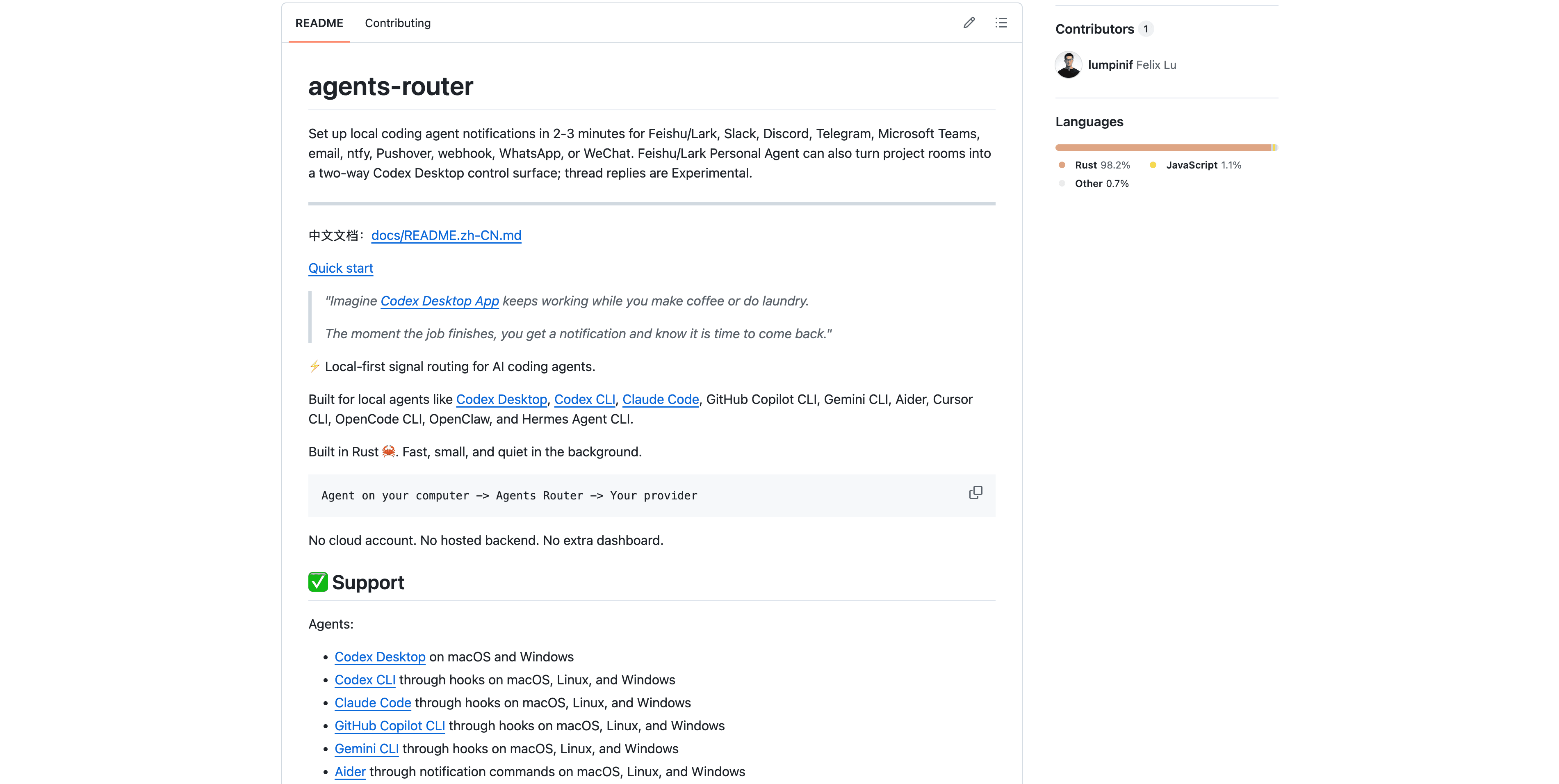
I built Agents Router so local coding agents can keep working while I step away from the computer, then tell me clearly when a task is done or needs attention.
The problem
Long agent tasks make people check the terminal over and over. Existing notification setups are usually tied to one agent or one chat provider, and many require another hosted service.
I wanted one small local process that could watch different coding agents and route useful updates to the channel a person already uses.
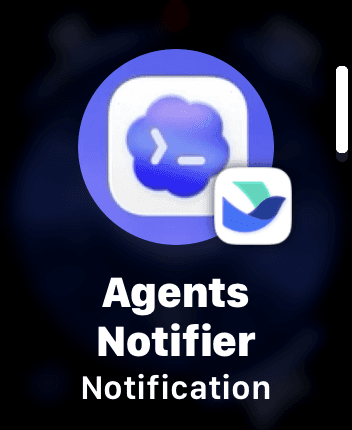
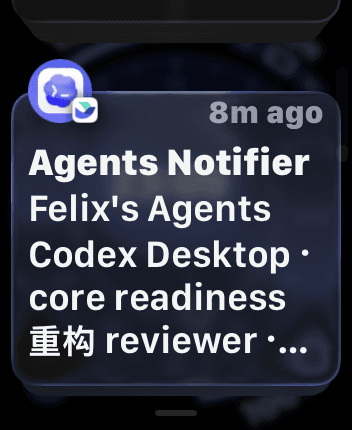
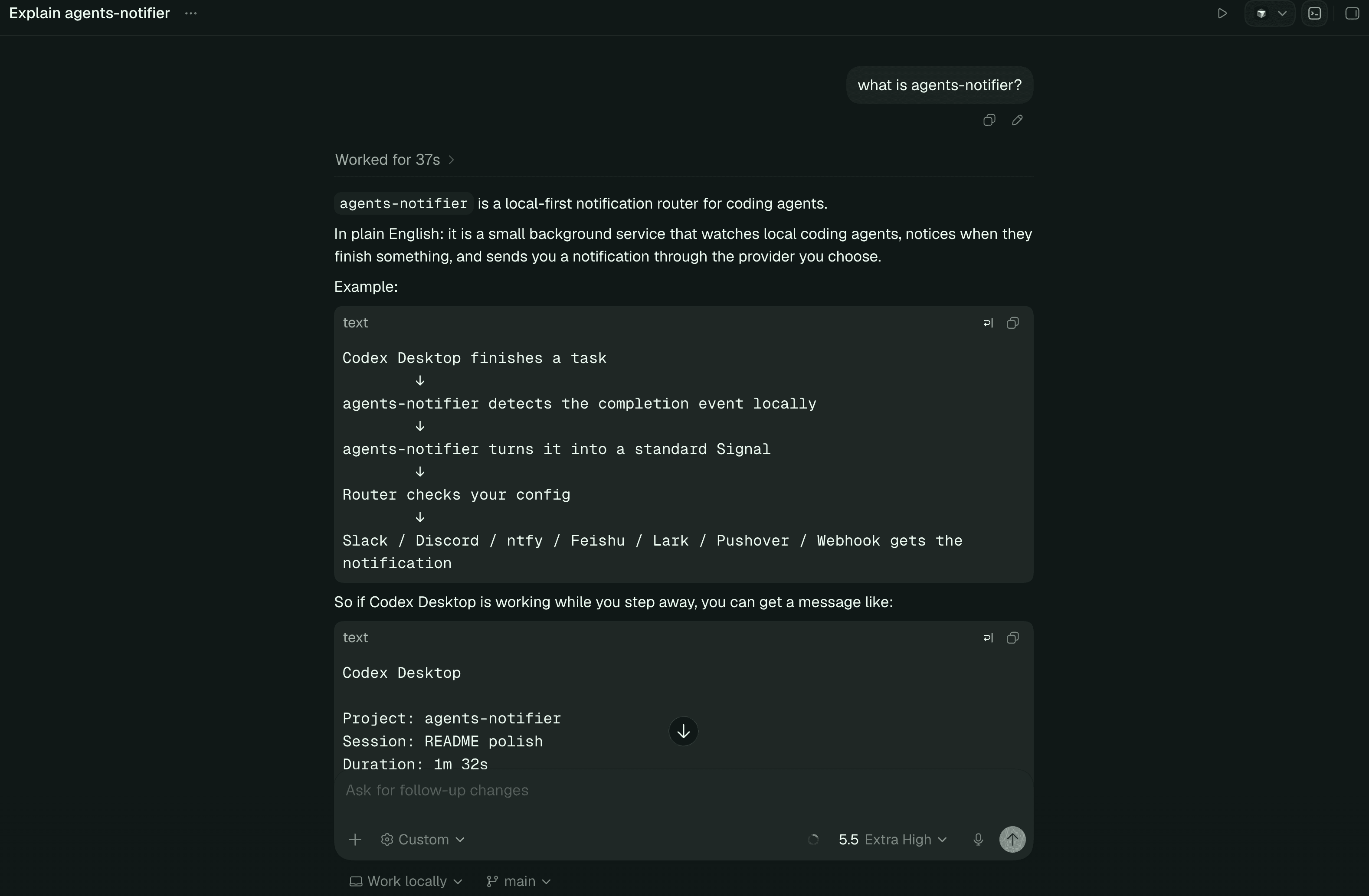
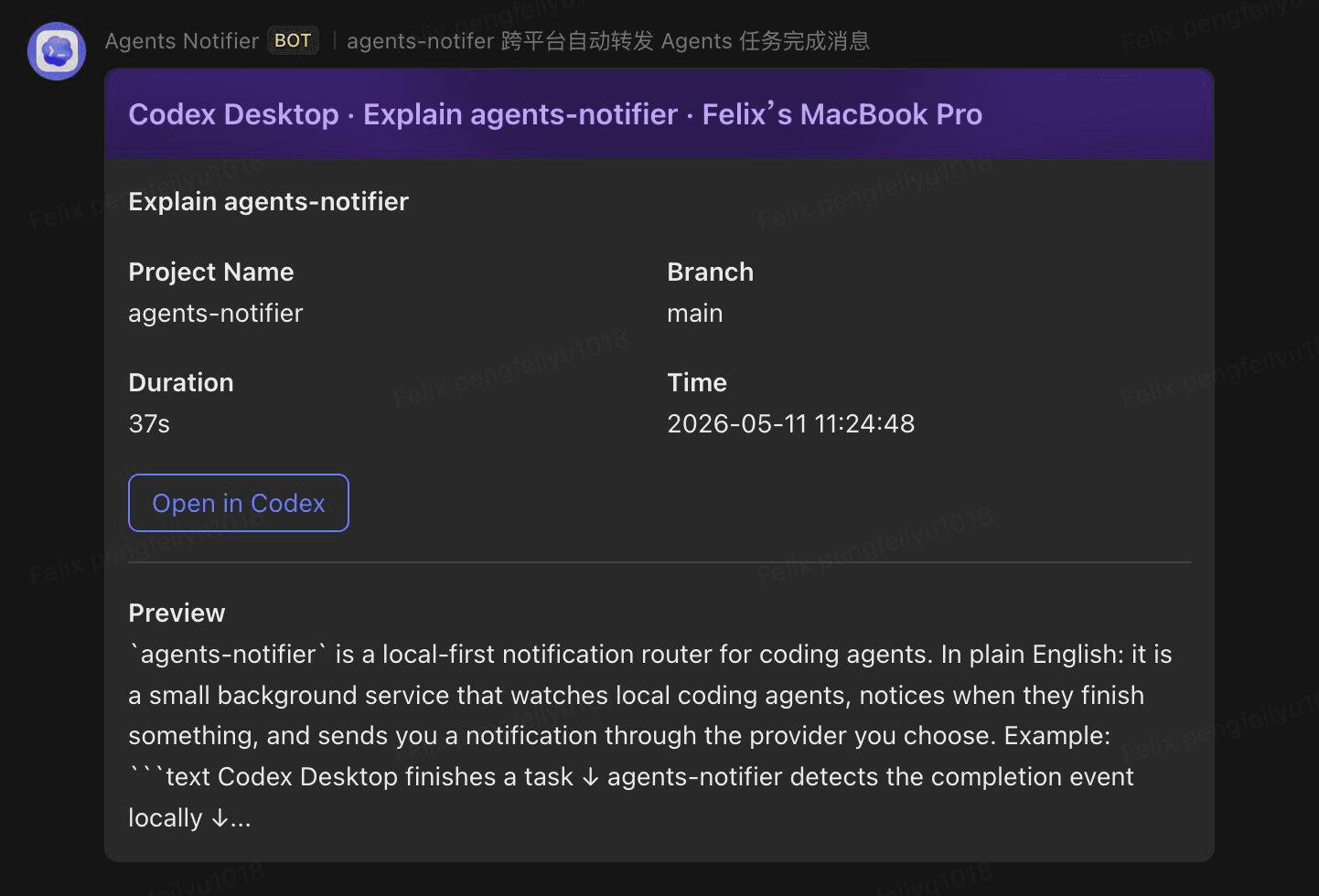
The repository previews in this article were captured under the project's earlier Agents Notifier name. They show the same local completion-to-provider loop that became Agents Router.
Local first
Agents Router is written in Rust and runs quietly on the user's computer. There is no Agents Router account, cloud backend, or extra dashboard between the agent and the selected provider.
It supports Codex Desktop, Codex CLI, Claude Code, Gemini CLI, Cursor CLI, OpenCode, and other agents, with destinations including Lark, Slack, Discord, Telegram, Teams, email, webhooks, and mobile notification services.
Beyond notifications
The Lark Personal Agent integration can connect project rooms to Codex Desktop. A person can start work from chat, receive the result in the same place, and open the local Codex thread when they need the full context.
I kept the two-way parts explicit and marked experimental behavior as experimental. The basic notification path remains useful on its own.
Quiet and dependable
The setup flow installs the right agent hooks, configures a provider, and starts the background service across macOS, Linux, and Windows. Delivery policies control how much prompt and answer detail leaves the machine.
A safety guard suppresses repeated messages and pauses a noisy provider before a bug can flood someone's chat. That reflects the standard I wanted for this tool: small, observable, and respectful of attention.