OpenTag
At Amplift, I helped turn OpenTag into a product that teams can install, understand, and use from the work threads they already have. My work covered the Lark and Feishu integration, the first public CLI path, and the onboarding and brand details around them.

The idea
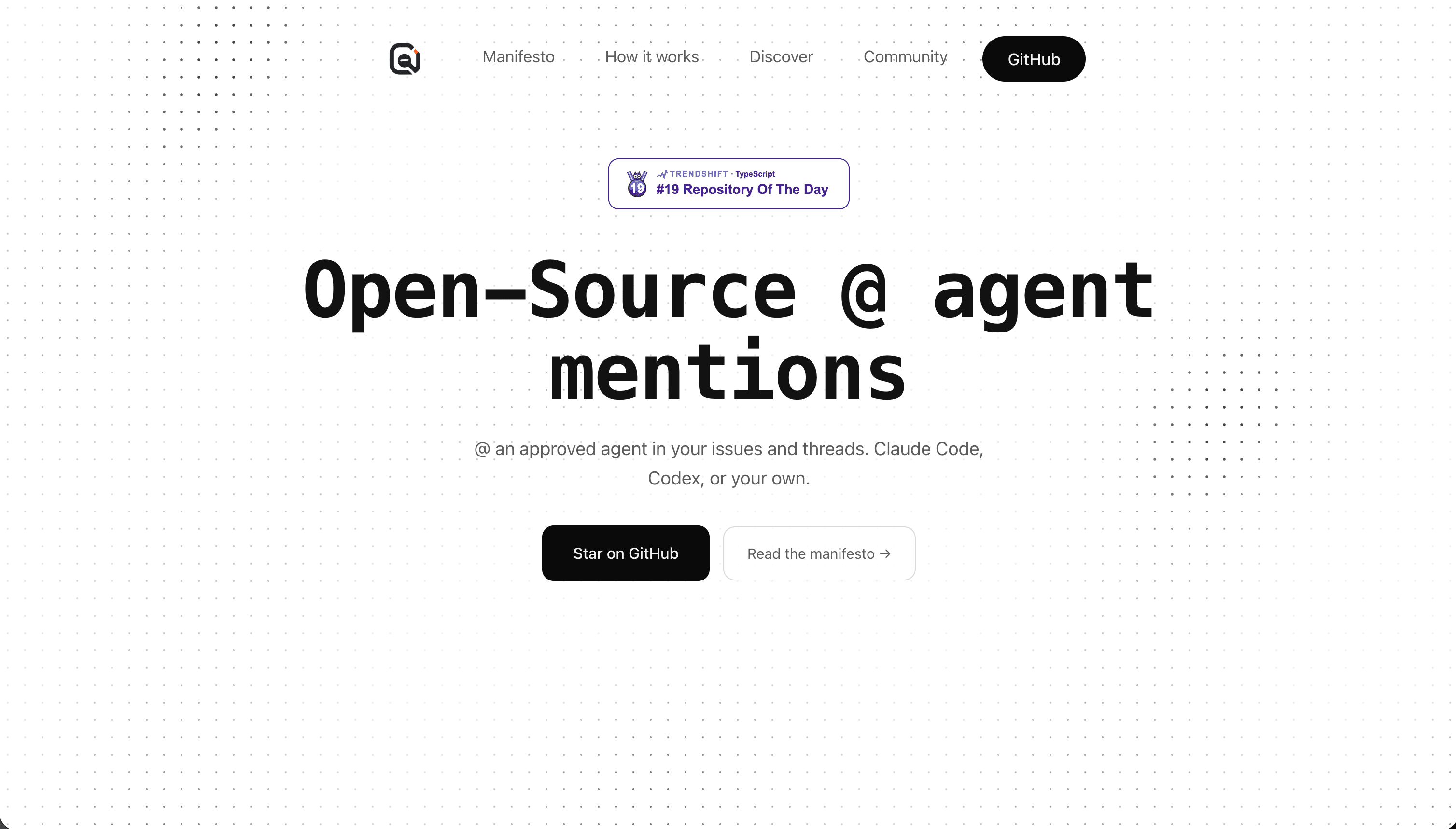
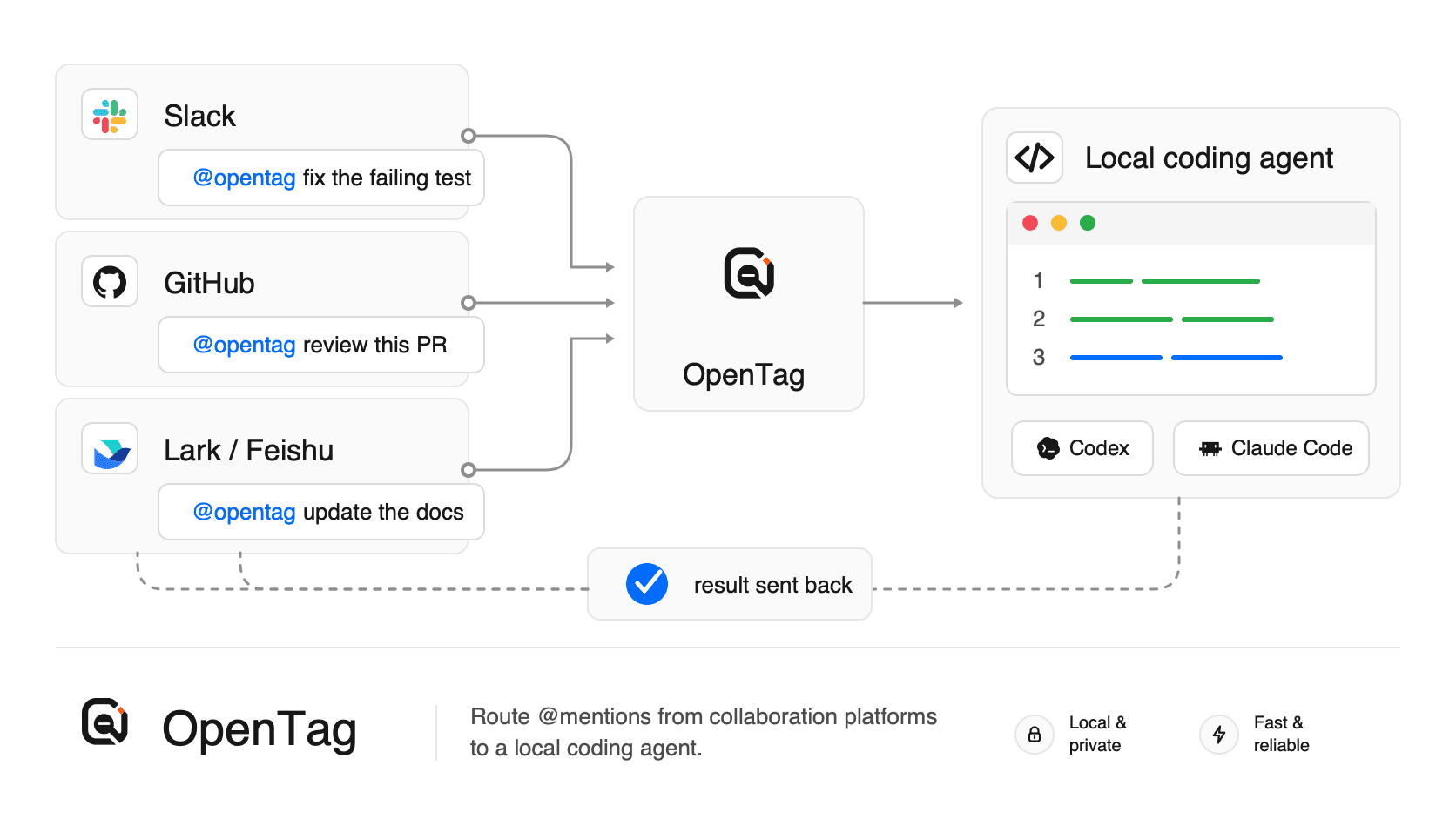
Agent work often begins in Slack, GitHub, Lark, or another shared thread, then loses that context when someone moves the task into a separate coding session. OpenTag keeps the request, approval, and final result connected to the place where the work started.
The coding agent still runs locally against the developer's own checkout. The collaboration platform remains the shared surface, while the machine remains the execution boundary.
A governed work loop
Each request becomes a bounded run with curated context, explicit permissions, recorded artifacts, and a result returned to the source thread. Actions that change a system of record stay reviewable instead of happening through an invisible shortcut.
That model makes the product useful beyond notifications. A team can see what the agent received, what it was allowed to do, and how the work ended.
Lark and Feishu
I built the Lark and Feishu connector, including long-connection event delivery, replies back into the source chat, and a self-service binding flow for connecting a chat to the right local project.
I focused on making the setup understandable to teams using the product for the first time, while keeping the connector inside the same runtime and permission model as every other platform.
CLI and onboarding
I also helped create and release the first public OpenTag CLI. The setup path brings the coding agent, local project, platform credentials, and background service into one guided flow instead of leaving users to assemble the system by hand.
Around that flow, I refined the bilingual documentation, agent-readable install guide, README, and brand assets. The goal was simple: the open-source product should feel complete before the first run, not only after someone understands its architecture.
What I focused on
My contribution sat where product, integration, and release work meet. I wanted a technically serious local-first system to remain approachable, especially at the moments where a team connects its first channel and trusts an agent with real work.